What's Your Property's Water Risk Score?
Get a clear, and actionable view of your building's exposure to water damage in just a few minutes.
Take the Free Assessment




ProSentry’s John Rusk joins Bo and Frank of Building Talk to explain ProSentry’s smart sensor solution, and how it stops leaks, saves buildings from gas service shut downs, and much more.
Join John Rusk, ProSentry’s President & Co-Founder, as he sits down with Building Talk podcast hosts, Bo and Frank, to discuss and demonstrate how ProSentry gets NYC residential building managers proactive with its ecosystem of wireless smart sensors. Together, they explore their innovative, LoRaWAN, monitoring and detection solution, revealing how ProSentry ensures compliance with Local Law 157, NYC’s latest legislation, requiring natural gas detectors in every residential building by January 2027*.
Rusk educates listeners on how ProSentry simplifies innovative building monitoring and detection for gas and water leaks, pest control, mechanical malfunctions, air quality, mold, and more. He explains how hard-to-locate gas leaks result in building-wide valve shut-off and a damaging process to get your building’s gas turned back on. Most NYC buildings can’t withstand the gas pipe pressure test of its natural gas piping to 600% of its normal pressure, often resulting in building-wide repiping or conversion to electric. Both costly and inconvenient.
While these guys bring on the laughter, there’s nothing funny about saving hundreds of thousands of dollars in repairs and renovations, avoiding non-compliance fines, lowering insurance premiums, increasing tenant safety and satisfaction, and enhancing the integrity of your professional reputation.

*Enforcement of Local Law 157 has been delayed until January 1, 2027, per legislation recently passed by the NYC Council Int. 1281-2025. This change is pending final approval by the Mayor.
Join John Rusk, ProSentry’s President & Co-Founder, as he sits down with Building Talk podcast hosts, Bo and Frank, to discuss and demonstrate how ProSentry gets NYC residential building managers proactive with its ecosystem of wireless smart sensors. Together, they explore their innovative, LoRaWAN, monitoring and detection solution, revealing how ProSentry ensures compliance with Local Law 157, NYC’s latest legislation, requiring natural gas detectors in every residential building by January 2027*.
Rusk educates listeners on how ProSentry simplifies innovative building monitoring and detection for gas and water leaks, pest control, mechanical malfunctions, air quality, mold, and more. He explains how hard-to-locate gas leaks result in building-wide valve shut-off and a damaging process to get your building’s gas turned back on. Most NYC buildings can’t withstand the gas pipe pressure test of its natural gas piping to 600% of its normal pressure, often resulting in building-wide repiping or conversion to electric. Both costly and inconvenient.
While these guys bring on the laughter, there’s nothing funny about saving hundreds of thousands of dollars in repairs and renovations, avoiding non-compliance fines, lowering insurance premiums, increasing tenant safety and satisfaction, and enhancing the integrity of your professional reputation.
*Enforcement of Local Law 157 has been delayed until January 1, 2027, per legislation recently passed by the NYC Council Int. 1281-2025. This change is pending final approval by the Mayor.
Insights, innovations and updates from the ProSentry Knowledge Base

A Case Study in How the Insurance Industry Rewards Proactive Risk Management
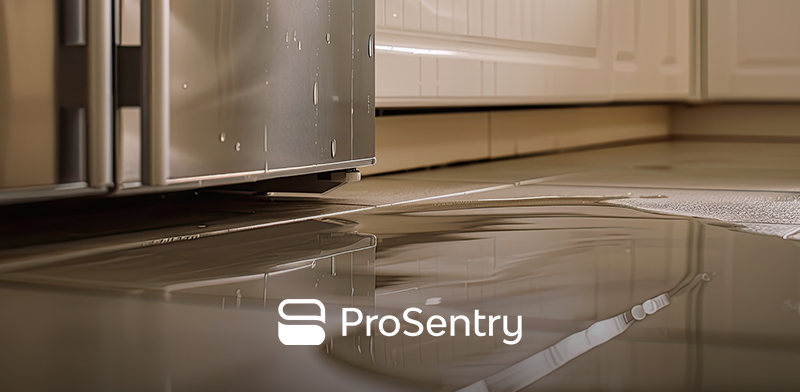
ProSentry introduces the Water Damage Prevention Score, a free risk assessment designed to help Boards, property owners, and managers identify vulnerabilities and strengthen their building's risk mitigation strategy.
A Case Study in How the Insurance Industry Rewards Proactive Risk Management
Explore the Knowledge Base


