What's Your Property's Water Risk Score?
Get a clear, and actionable view of your building's exposure to water damage in just a few minutes.
Take the Free Assessment

How one Northeast condo saved $100,000 in insurance and prevented 10 leaks using ProSentry's Smart Monitoring system.


A 90-day non-renewal notice had forced doubled premiums in the secondary market before ProSentry's Smart water leak and temperature monitoring solution reversed it.

Every alert was resolved before it became a claim.

Real-time alerts to building staff, board, and unit owners caught them regardless.

Kitchens, bathrooms, laundry areas, and HVAC components were all monitored.

Fourteen months of zero claims gave it the track record to leave the secondary market.
A 20-unit high-end condominium in an urban Northeast market turned to water damage prevention technology after a newly elected board member uncovered a rapidly escalating insurance crisis. Previous water-related incidents had led to policy challenges, mounting premiums, and growing homeowner concern about the building's long-term risk profile.
This case study outlines how the board sought a smarter, more proactive approach to water-leak mitigation, and how implementing a comprehensive monitoring system helped the building stabilize its risks, prevent further losses, and make real progress toward improving its insurance standing.

Costly water claims made the building difficult to insure.
The consequences were immediate and severe. The building's carrier issued a non-renewal with only 90 days' notice, leaving the board with little time to find replacement coverage. With mainstream insurers unwilling to take on the risk, the property was forced into the non-admitted, or secondary, insurance market, where premiums doubled overnight. To secure the new policy, every homeowner was assessed thousands of dollars, creating financial strain and raising concerns about the building's long-term insurability.
Determined to reverse the building's insurance trajectory, the board began an extensive search for a more reliable, long-term water leak mitigation strategy. They evaluated five different technologies and compared two primary approaches: valve-based systems that require plumbing integration, and sensor-based systems designed for easier deployment in existing buildings.

Five technologies evaluated.
One clear solution emerged.
After assessing cost, disruption, reliability, and long-term usability, the board chose ProSentry's sensor-based solution. The hardware stood out for its compact, modern design and dependable performance.
Equally important was the company's service model and its clear understanding of how water leak monitoring could support improved insurance outcomes. ProSentry also came with existing broker and risk-mitigation relationships, giving the board greater confidence in both the technology and the team behind it.
The board moved forward with a building-wide Smart water leak detection strategy, installing sensors in every unit and at each key water source. This ensured full coverage across kitchens, bathrooms, laundry areas, and HVAC components, locations most commonly associated with water-related claims.
The monitoring system was configured to keep all essential stakeholders informed. Building staff received real-time alerts to respond quickly to potential issues, while board leadership gained visibility into overall risk trends and recurring problem areas. Unit owners were also included in the notification process, allowing them to take immediate action whether at home or away. Together, this created a coordinated monitoring network designed to detect issues early and prevent small water leaks from developing into costly damage.
Four of the ten water leaks occurred while the residents were not home, underscoring the value of real-time monitoring and coordinated response between staff and the board. The alerts covered a range of common failure points, including toilets, washing machine hoses, dishwasher lines, and an HVAC condenser pan overflow. Several of these events had the potential to cause serious damage, but each one was caught early because the sensors detected moisture at the source.

Within just two months of installing the monitoring system, the building saw a measurable shift in how insurers evaluated its risk profile.

The board secured a $100,000 reduction in insurance costs, an early signal that proactive mitigation efforts were resonating with carriers.
Although the property remained in the secondary market at that point, the improved loss-prevention measures helped demonstrate that the building was taking real steps to address its previous challenges.
Over the following two years, the results continued to strengthen the building's insurance position.
With this track record in place, the building is re-entering the insurance market to pursue options with admitted carriers, along with potential water-mitigation discounts offered by several major providers. The goal is to fully transition back to admitted carrier coverage and continue lowering long-term insurance costs through sustained risk reduction.
The building's experience illustrates how proactive Smart water leak detection can shape both day-to-day operations and long-term financial outcomes. After installing the system, the condominium achieved a $100,000 reduction in insurance costs, successfully detected and addressed 10 water leak events, and reported zero claims during the following years. These results provided insurers with a clear record of improved risk management and helped restore the building's overall insurability.
A 90-day non-renewal notice had forced doubled premiums in the secondary market before ProSentry's Smart water leak and temperature monitoring solution reversed it.
Every alert was resolved before it became a claim.
Real-time alerts to building staff, board, and unit owners caught them regardless.
Kitchens, bathrooms, laundry areas, and HVAC components were all monitored.
Fourteen months of zero claims gave it the track record to leave the secondary market.
A 20-unit high-end condominium in an urban Northeast market turned to water damage prevention technology after a newly elected board member uncovered a rapidly escalating insurance crisis. Previous water-related incidents had led to policy challenges, mounting premiums, and growing homeowner concern about the building's long-term risk profile.
This case study outlines how the board sought a smarter, more proactive approach to water-leak mitigation, and how implementing a comprehensive monitoring system helped the building stabilize its risks, prevent further losses, and make real progress toward improving its insurance standing.
Costly water claims made the building difficult to insure.
The consequences were immediate and severe. The building's carrier issued a non-renewal with only 90 days' notice, leaving the board with little time to find replacement coverage. With mainstream insurers unwilling to take on the risk, the property was forced into the non-admitted, or secondary, insurance market, where premiums doubled overnight. To secure the new policy, every homeowner was assessed thousands of dollars, creating financial strain and raising concerns about the building's long-term insurability.
Determined to reverse the building's insurance trajectory, the board began an extensive search for a more reliable, long-term water leak mitigation strategy. They evaluated five different technologies and compared two primary approaches: valve-based systems that require plumbing integration, and sensor-based systems designed for easier deployment in existing buildings.
Five technologies evaluated.
One clear solution emerged.
After assessing cost, disruption, reliability, and long-term usability, the board chose ProSentry's sensor-based solution. The hardware stood out for its compact, modern design and dependable performance.
Equally important was the company's service model and its clear understanding of how water leak monitoring could support improved insurance outcomes. ProSentry also came with existing broker and risk-mitigation relationships, giving the board greater confidence in both the technology and the team behind it.
The board moved forward with a building-wide Smart water leak detection strategy, installing sensors in every unit and at each key water source. This ensured full coverage across kitchens, bathrooms, laundry areas, and HVAC components, locations most commonly associated with water-related claims.
The monitoring system was configured to keep all essential stakeholders informed. Building staff received real-time alerts to respond quickly to potential issues, while board leadership gained visibility into overall risk trends and recurring problem areas. Unit owners were also included in the notification process, allowing them to take immediate action whether at home or away. Together, this created a coordinated monitoring network designed to detect issues early and prevent small water leaks from developing into costly damage.
Four of the ten water leaks occurred while the residents were not home, underscoring the value of real-time monitoring and coordinated response between staff and the board. The alerts covered a range of common failure points, including toilets, washing machine hoses, dishwasher lines, and an HVAC condenser pan overflow. Several of these events had the potential to cause serious damage, but each one was caught early because the sensors detected moisture at the source.
Within just two months of installing the monitoring system, the building saw a measurable shift in how insurers evaluated its risk profile.
The board secured a $100,000 reduction in insurance costs, an early signal that proactive mitigation efforts were resonating with carriers.
Although the property remained in the secondary market at that point, the improved loss-prevention measures helped demonstrate that the building was taking real steps to address its previous challenges.
Over the following two years, the results continued to strengthen the building's insurance position.
With this track record in place, the building is re-entering the insurance market to pursue options with admitted carriers, along with potential water-mitigation discounts offered by several major providers. The goal is to fully transition back to admitted carrier coverage and continue lowering long-term insurance costs through sustained risk reduction.
The building's experience illustrates how proactive Smart water leak detection can shape both day-to-day operations and long-term financial outcomes. After installing the system, the condominium achieved a $100,000 reduction in insurance costs, successfully detected and addressed 10 water leak events, and reported zero claims during the following years. These results provided insurers with a clear record of improved risk management and helped restore the building's overall insurability.
Insights, innovations and updates from the ProSentry Knowledge Base

A Case Study in How the Insurance Industry Rewards Proactive Risk Management
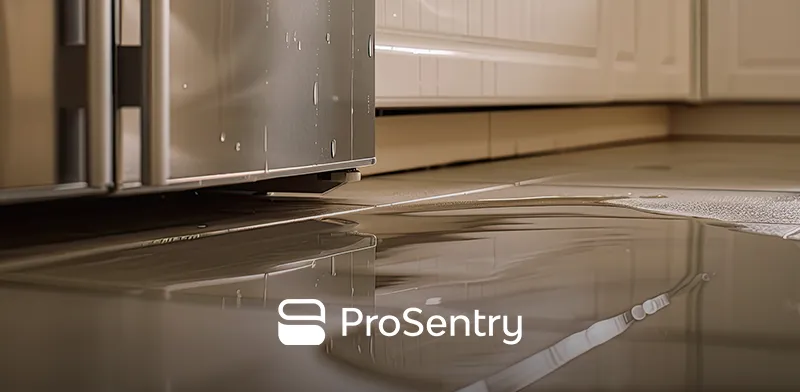
ProSentry introduces the Water Damage Prevention Score, a free risk assessment designed to help Boards, property owners, and managers identify vulnerabilities and strengthen their building's risk mitigation strategy.
A Case Study in How the Insurance Industry Rewards Proactive Risk Management
Explore the Knowledge Base